

Bhutan - Part I: In Search of the Secret Behind the Smile
Part I — The Journey Begins
There are destinations that capture our imagination because of their famous landmarks, breathtaking scenery, or luxurious accommodations. Bhutan certainly has all of those. Yet for years, what intrigued me most wasn't just the photographs of Tiger's Nest or the images of snow-capped Himalayan peaks.
It was the people who returned.
Again and again, I heard travelers describe Bhutan in similar ways. They spoke of its beauty, its spirituality, and its hospitality, but what stayed with me most was the expression on their faces and tones. They seemed calmer, almost as if they had experienced something they couldn't quite put into words. More than once, I heard someone say, "I didn't want to end the journey."
As a travel advisor, that made me more curious.
Bhutan is not an easy destination to reach. It requires careful planning, a long journey, and a willingness to travel differently. Why would so many people choose to visit a small Himalayan kingdom and return feeling transformed? Was it simply the dramatic scenery? Was it Buddhism? Gross National Happiness? Or was there something deeper that couldn't be explained in a brochure or photograph?
I wanted to find out for myself.
I'll admit I had a few assumptions before I left. I imagined Bhutan as a country that might feel primitive and rustic. I wondered whether I would be comfortable. Would there be bugs? Would the accommodations feel too basic? Would the food be difficult for me? And since I have not hiked over the winter, I was questioned if I’d struggle with making it to Tiger's Nest.
Still, curiosity outweighed hesitation.
As someone who designs journeys for others, I also wanted to understand the practical side of visiting Bhutan. Unlike most destinations, you cannot simply reserve a hotel online and explore independently.
What I didn't realize was that Bhutan would begin teaching me long before I reached my first monastery.
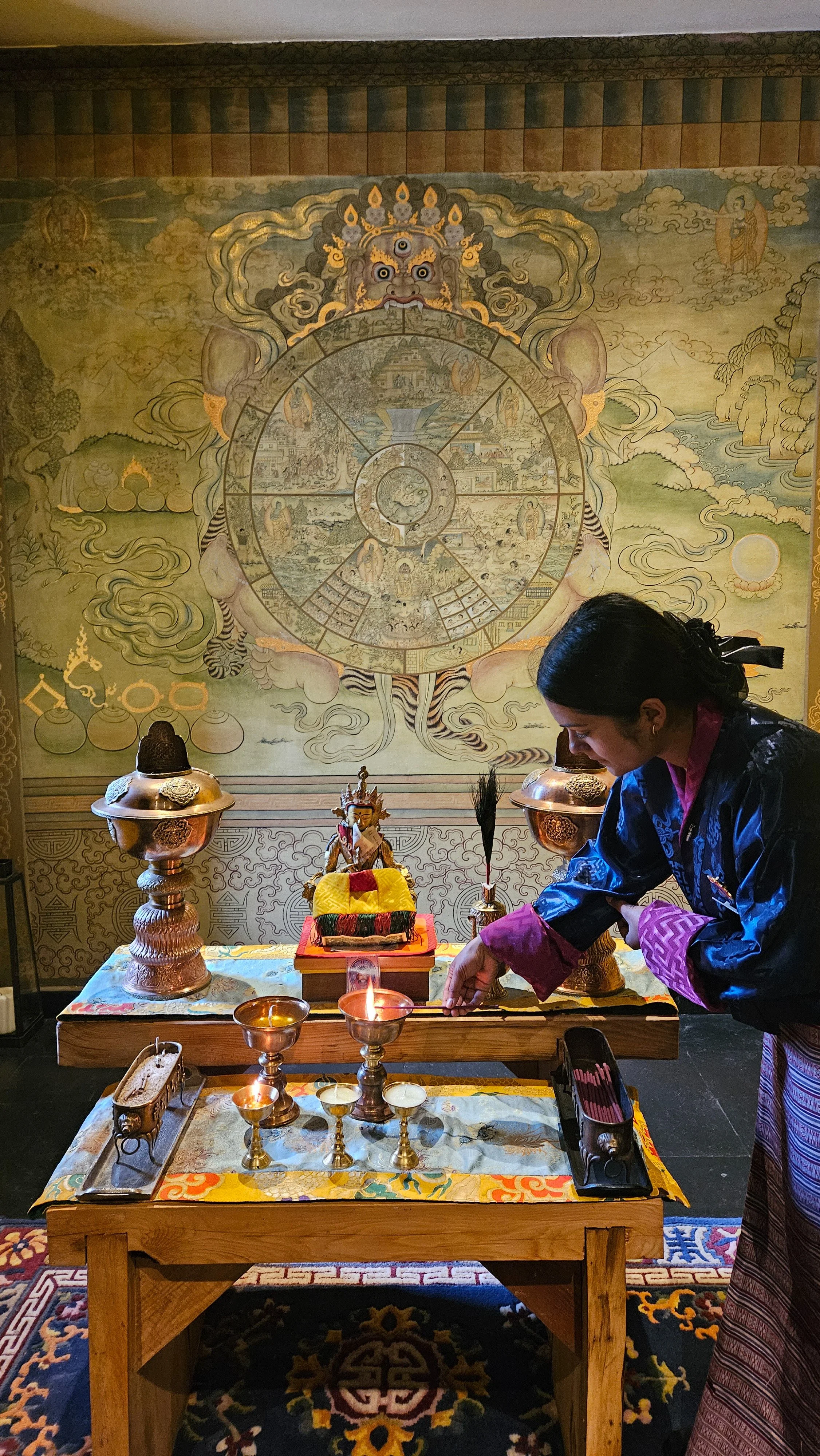
A blessing to begin our journey.
The Journey Begins Before You Arrive
Planning a trip to Bhutan is unlike planning almost anywhere else in the world.
Every visitor works with a licensed Bhutanese tour operator who arranges the visa, transportation, accommodations, licensed guides, and experiences. My local partner handled every detail seamlessly, making the process effortless just as they do for my clients. Instead of feeling restrictive, it felt reassuring. I knew that the people designing my journey understood their country better than anyone.
Then there is the Sustainable Development Fee. When people first hear about it, they often focus on the cost. I found myself looking at it differently after understanding its purpose. The fee helps preserve Bhutan's environment, culture, and communities while preventing overtourism. It supports the country's commitment to protecting what makes Bhutan unique rather than allowing rapid tourism to reshape it.
In many destinations, success is often measured by how many visitors arrive.
In Bhutan, success seems to be measured by how well the country remains Bhutan.
Every international visitor begins the journey in Paro, Bhutan's only international airport, where only a very limited number of specially trained pilots are qualified to land there, because of the surrounding Himalayan mountains, high altitude, and changing weather conditions.
Before arriving, I wondered if language would be one of the challenges. Instead, I was pleasantly surprised to find that English is widely spoken throughout the country. Communication felt easy from the moment we landed. Our local representative met us at the airport, guided us through customs, helped us exchange currency, something that cannot easily be done before arriving, and welcomed us with genuine warmth.
My first impression of Bhutan wasn't one of isolation.
It was one of openness.
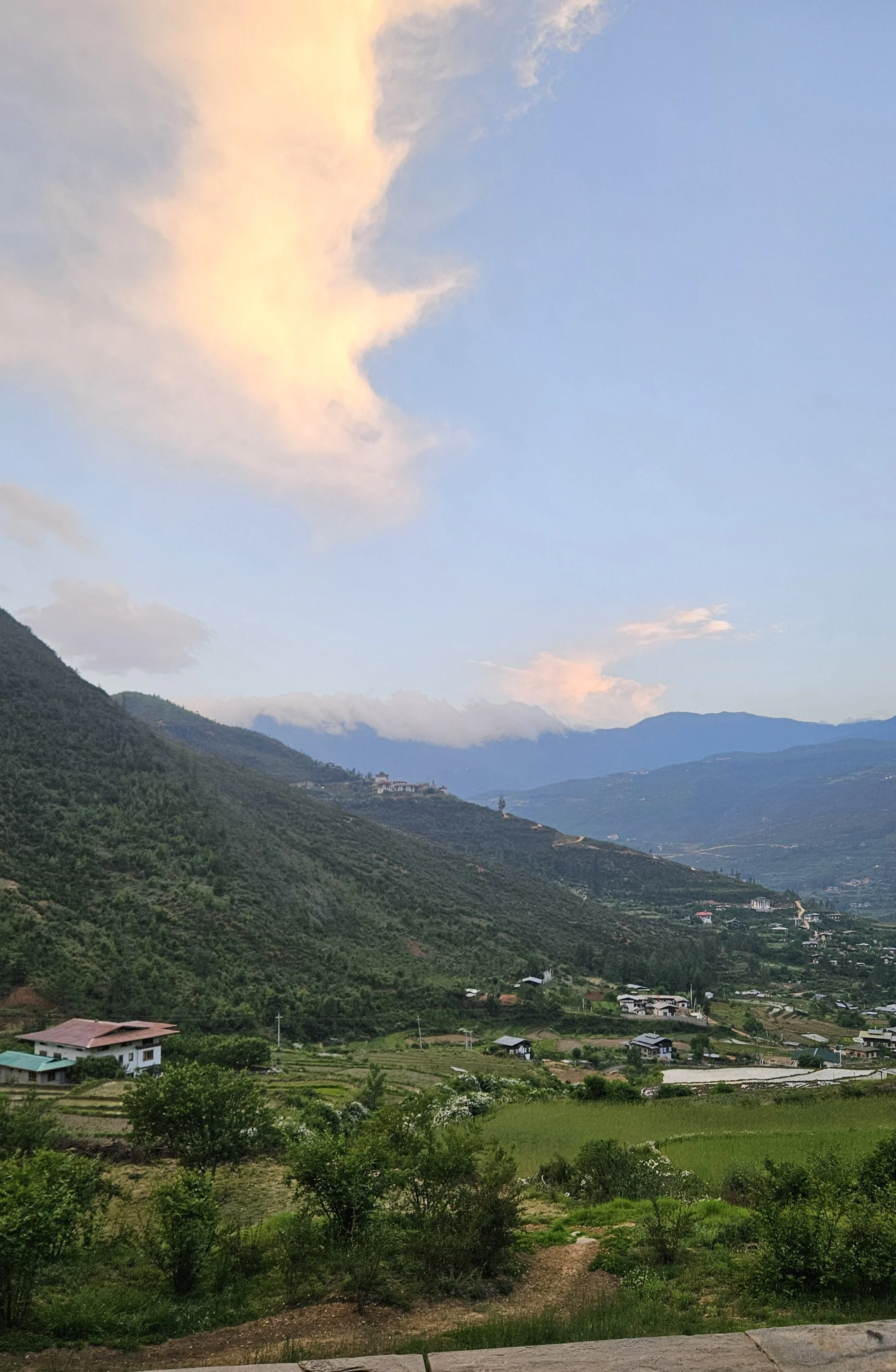
A view from Bhutan Spirit Sanctuary.
First Impressions of Paro
Paro was the perfect introduction to Bhutan.
The airport itself felt unlike any I had visited before. Rather than a large enclosed terminal, it blended naturally into its surroundings with traditional Bhutanese architecture and mountain views that immediately reminded me why people travel halfway around the world to be here.
The pace was noticeably relaxed
Not inefficient.
Punctual but simply... unhurried.
That difference became one of the themes I would notice again and again throughout the journey.
Our first stay was at Bhutan Spirit Sanctuary, nestled among farms and mountains. The setting alone reminded me to slow down, but one experience in particular left a lasting impression.
Before dinner, I met with a traditional Bhutanese herbal doctor for a wellness consultation. Without asking me questions or reviewing any medical history, he gently held my wrist, read my pulse, and described several aspects of my health with remarkable accuracy… almost spooky!
Whether one views traditional medicine as science, intuition, or centuries of accumulated wisdom, I found the experience fascinating.
It wasn't simply a health consultation.
It was my first glimpse into a culture where physical, emotional, and spiritual well-being are viewed as inseparable.
After that consultation, I enjoyed one of the best massages I have experienced after the long journey.
As I looked out across the surrounding valley, I realized something unexpected.
I hadn't yet visited Tiger's Nest.
I hadn't spoken with monks.
I hadn't learned much Gross National Happiness.
Yet I already felt myself breathing slowly. Yes, that was one of the pieces of advice prescribed by the doctor.
Perhaps that was the first clue. Perhaps Bhutan doesn't wait until you reach its famous landmarks to begin changing your perspective.
Perhaps the journey begins the moment you allow yourself to arrive.
Next: From the peaceful valleys of Punakha to the remote Haa Valley, I began to understand why Bhutan's greatest treasures aren't its landmarks—they're its people.
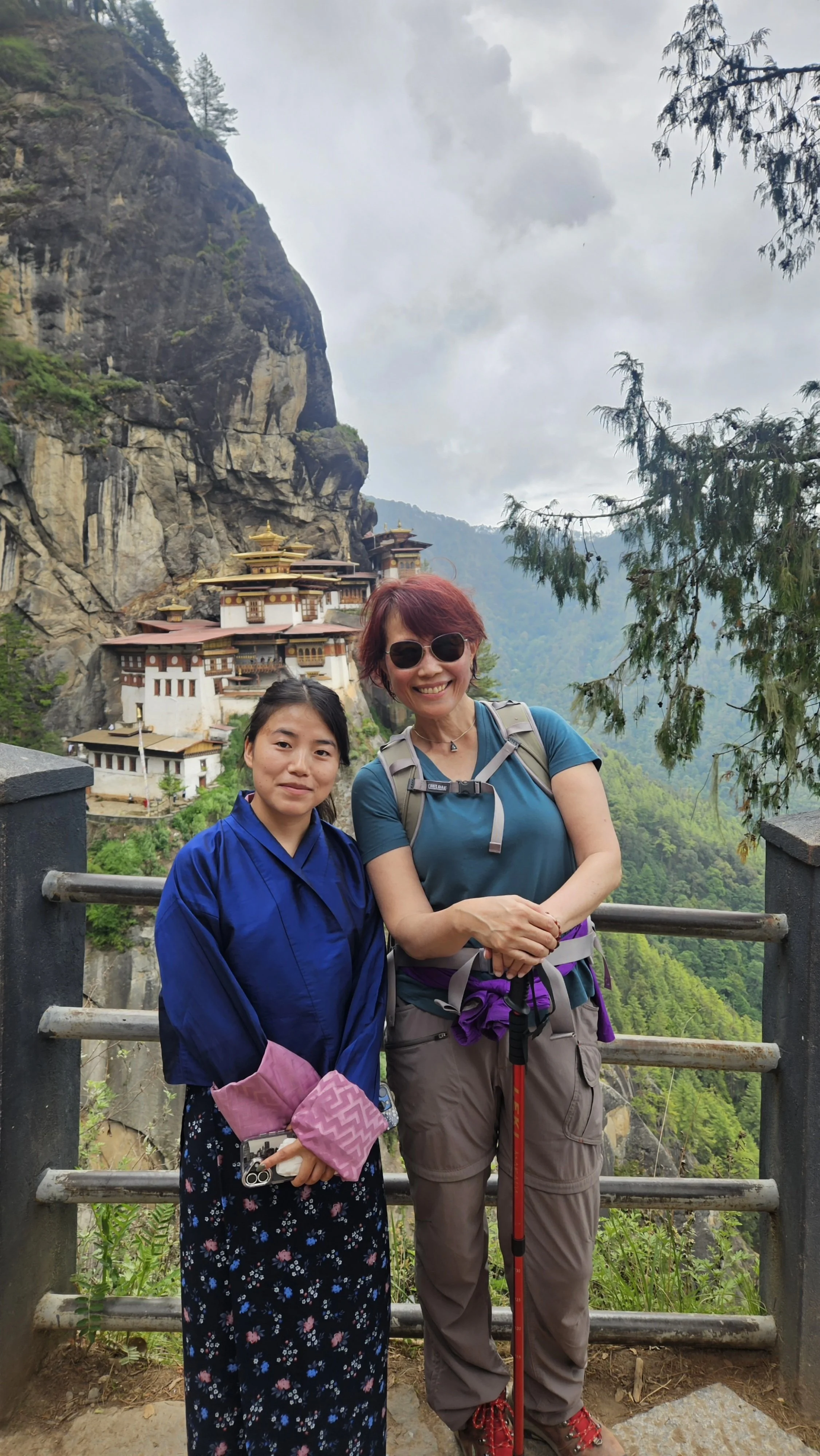
Almost to Tiger’s Nest!